It Started With One Customer Complaint...
Monday morning.
A long-standing customer called your support team
Support blamed Operations.
Operations blamed Sales.
Sales said the customer had requested something different.
Engineering was waiting for approval.
Finance hadn't received the purchase order.
Your leadership team spent the next four hours finding answers that should have taken four minutes.
By the end of the day, everyone had worked hard.
Yet nothing meaningful had moved forward.
Sound familiar?
Stop Thinking About the Solution — Start With the Problem
Here's the mistake almost every first-time founder makes: they fall in love with their solution before they've truly understood the problem.
You have an idea for an app. Great. But what problem does it solve? For whom? How does that person currently deal with the problem — and why is the current solution not good enough?
The Problem Isn't Your People.
Most business leaders assume they have:
- A communication problem.
- A process problem.
- A technology problem.
- A management problem.
But those are only symptoms. The real issue is that every department is operating with its own rules.
Marketing has one way of working.
Sales has another.
Operations follows something different.
Technology builds what it understands.
Finance has its own approval process.
Everyone is busy.
No one is truly aligned.
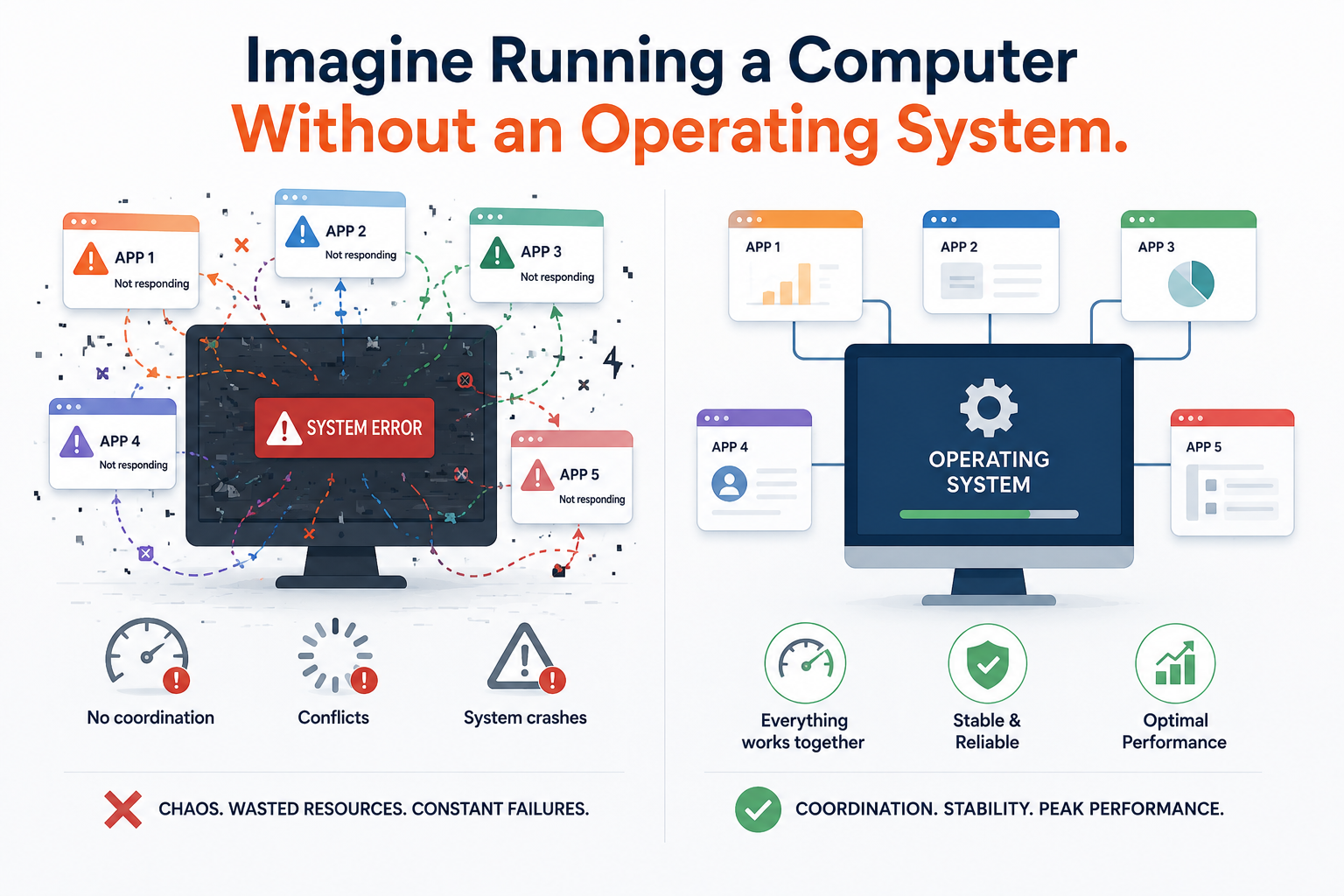
Imagine Running a Computer Without an Operating System.
The hardware is excellent.
The applications are powerful.
The internet is fast.
But there is no Windows.
No macOS.
No Linux.
Nothing coordinates the work.
Every application competes for resources.
Everything eventually crashes.
Businesses behave the same way.
Your employees are the hardware.
Your software tools—CRM, ERP, HRMS, Jira, Slack, Teams, AI assistants—are the applications.
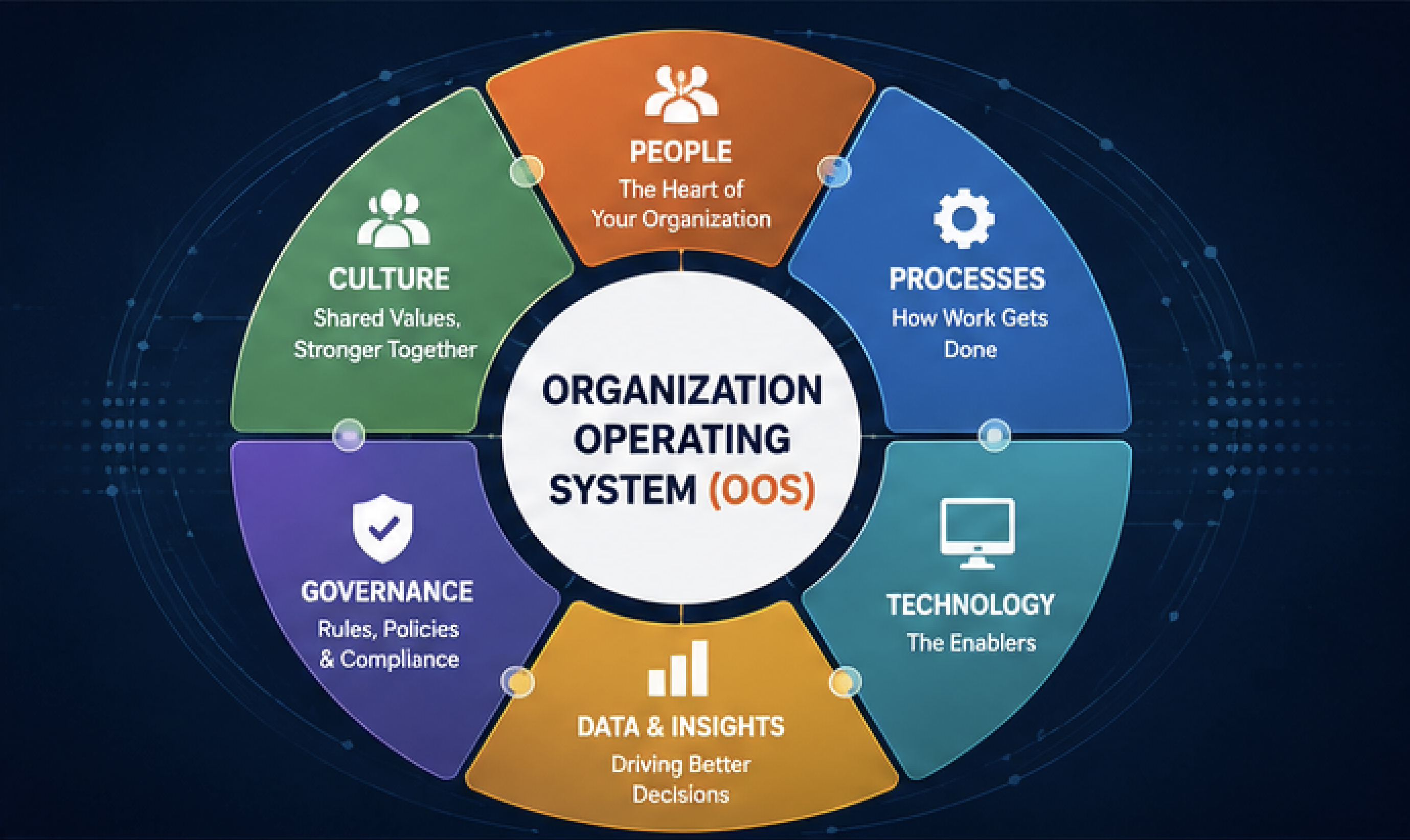
But something must coordinate them all. That "something" is your Organization Operating System (OOS).
So, What Exactly Is an Organization Operating System?
An Organization Operating System is not another software platform.
It is the way your business works.
It defines:
- How decisions are made.
- How work moves between teams.
- Who owns what.
- How priorities are set.
- How technology supports people.
- How success is measured.
- How improvements become part of everyday operations.
In simple terms:
An Organization Operating System turns individual effort into organizational performance.
What Happens When You Don't Have One?
Growth becomes painful.
New employees take months to become productive.
Managers spend more time answering questions than solving problems.
Meetings increase.
Accountability decreases.
Projects slip.
Customers become frustrated.
Leaders become bottlenecks.
Ironically, many businesses become less efficient as they become more successful.
Image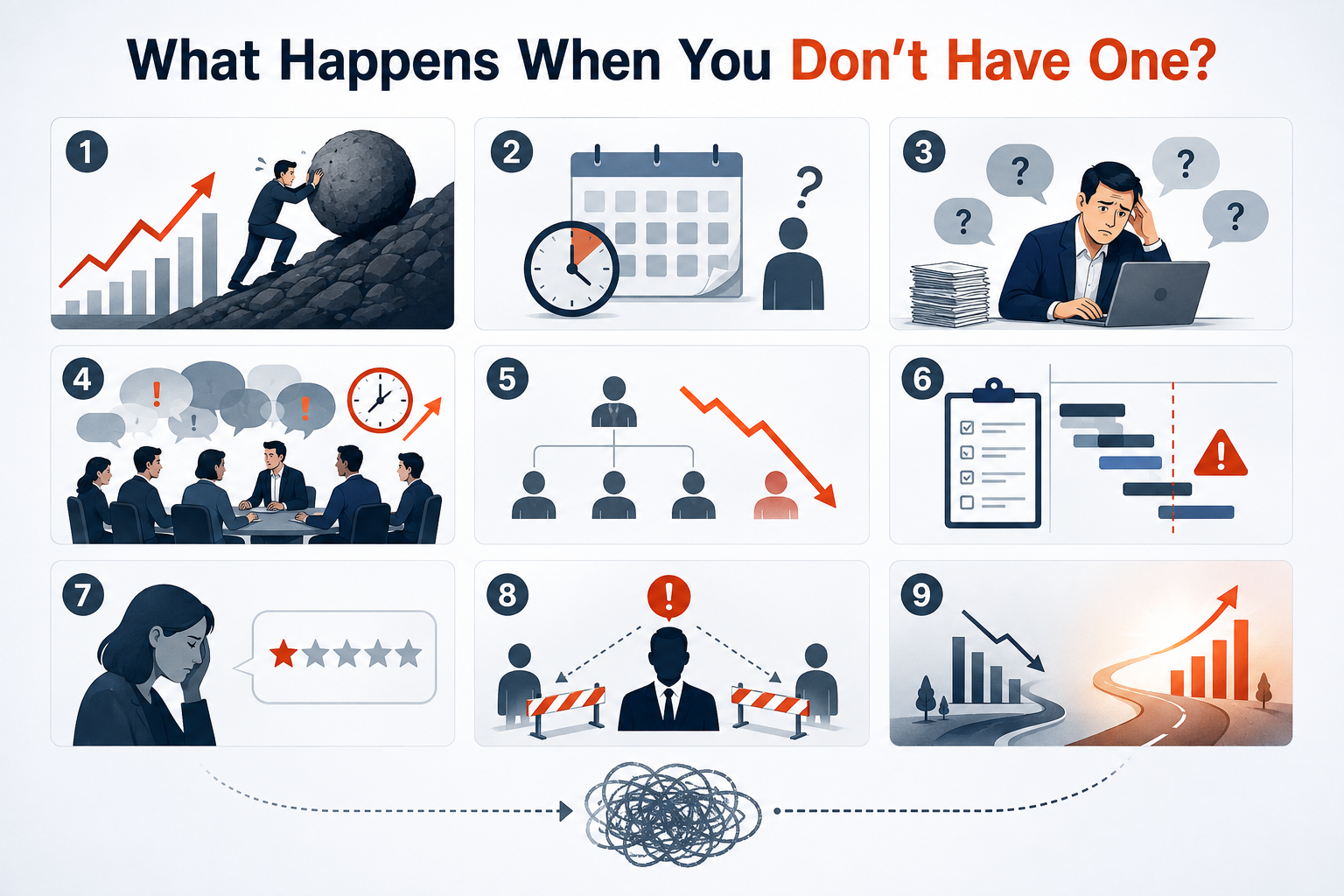
What Changes When You Build One?
Imagine a different Monday morning.
A customer raises an issue.
Everyone already knows:
- Who owns it.
- What happens next.
- Which systems need updating.
- Who needs to approve.
- When the customer will receive an update.
- How leadership can monitor progress.
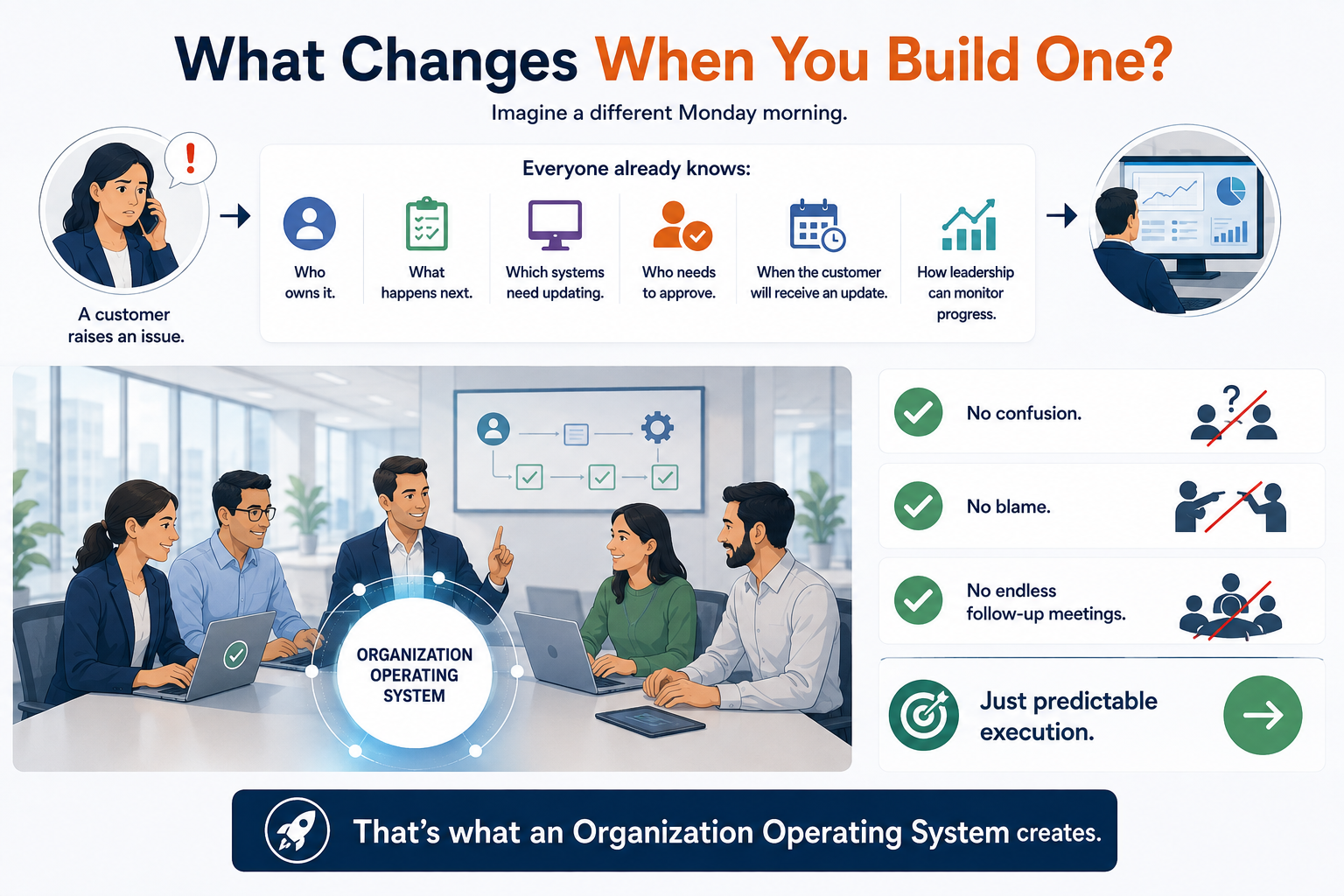
No confusion.
No blame.
No endless follow-up meetings.
Just predictable execution.
That's what an Organization Operating System creates.
At Pixelerant, We Don't Start With Software.
Many consulting firms begin by recommending tools.
We begin by understanding how your business actually works.
Before writing a single line of code or configuring a platform, we answer questions like:
- Where does work slow down?
- Why are teams duplicating effort?
- Which approvals create unnecessary delays?
- What information is missing when decisions are made?
- Which repetitive tasks should be automated?
- How can AI support—not replace—your people?
Only after understanding these answers do we design the right operating model.
Because technology should support your business—not force your business to adapt to technology.
What We Build
At Pixelerant Solutions, we help organizations build an Organization Operating System (OOS) that aligns strategy, people, processes, and technology—creating a business that operates with clarity, consistency, and confidence.
Our framework is built around seven core pillars:
🎯 Strategic Alignment
Align business vision with clear, measurable objectives so every team is working toward the same outcomes.
⚙️ Process Design
Design efficient, repeatable workflows that eliminate ambiguity, reduce bottlenecks, and improve execution.
👥 Organizational Clarity
Define roles, responsibilities, ownership, and decision-making authority to create accountability across the organization.
🚀 Agile Delivery
Enable predictable execution through transparent priorities, structured collaboration, and continuous delivery practices.
🤖 Automation & AI
Automate repetitive work and leverage AI to improve productivity, accelerate decision-making, and allow teams to focus on higher-value initiatives.
📊 Data & Visibility
Provide leaders with real-time insights, meaningful dashboards, and actionable KPIs that support faster, better-informed decisions.
🔄 Continuous Improvement
Embed a culture of continuous learning and optimization, ensuring your operating model evolves as your business grows.
The Real Transformation
The biggest change isn't:
❌ Faster software
❌ Better reports
❌ Fewer meetings
The real transformation is confidence.
✅ Confidence that every employee understands their role.
✅ Confidence that teams work together with clarity and accountability.
✅ Confidence that customers receive a consistent experience.
✅ Confidence that leaders have complete visibility into the business.
✅ Confidence that the organization can scale without leadership becoming the bottleneck.
Great Companies Don't Scale Through Hard Work Alone
They scale through systems.
When your people, processes, technology, and governance work together as one, growth becomes structured instead of chaotic.
- Teams move faster.
- Decisions become clearer.
- Execution becomes predictable.
- Customers experience consistency.
- Leaders gain the freedom to focus on strategy instead of day-to-day firefighting.
That's the difference between:
Running a Business
Keeping operations moving every day.
Building an Organization
Creating a business that grows, adapts, and scales without breaking.
Build the Foundation for Sustainable GrowthAt Pixelerant Solutions, we help organizations design and implement an Organization Operating System that aligns every part of the business—from strategy and processes to technology, people, and governance.
Because sustainable growth isn't driven by working harder.
It's built on systems that enable your business to scale with clarity, consistency, and confidence.